
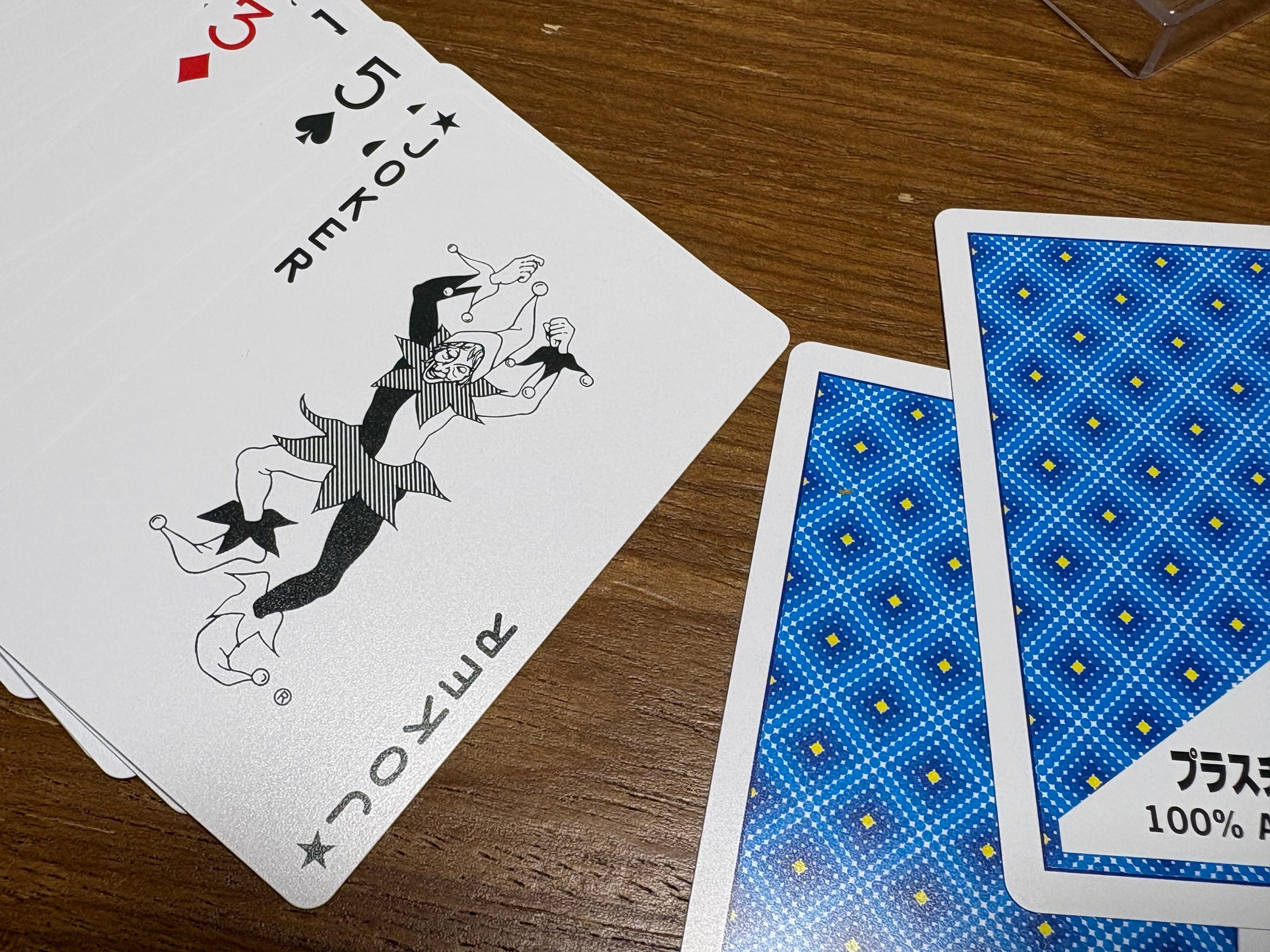
When it comes to plastic playing cards worldwide, Copag and KEM are the names that come to mind, but I don’t own any of those… As for the reasonably well-known cards I do have, I own a set of affordable, high-quality Japanese Angel Playing Cards. However, this brand comes in two versions—one with “EX” at the end of the model number and one without—and since I’ve been curious about the difference for a while, I laid them out side by side to compare their textures.
I’ve lined up the following three sets. I selected them all based on the criteria that they are plastic and Bridge size.
Translated with DeepL.com (free version)
- Angel Playing Cards SGNNBRG(“Sugo-playing-cards” Red—Exclusively for Plastic Contract Bridges)
- Angel Playing Cards(型番末尾EX/URLなし)
- Angel Playing Cards SPNN832(Plastic Playing Cards)
The EX-series playing cards aren’t available on Amazon, and sometimes they’re in stock at toy stores or convenience stores, and sometimes they’re not.
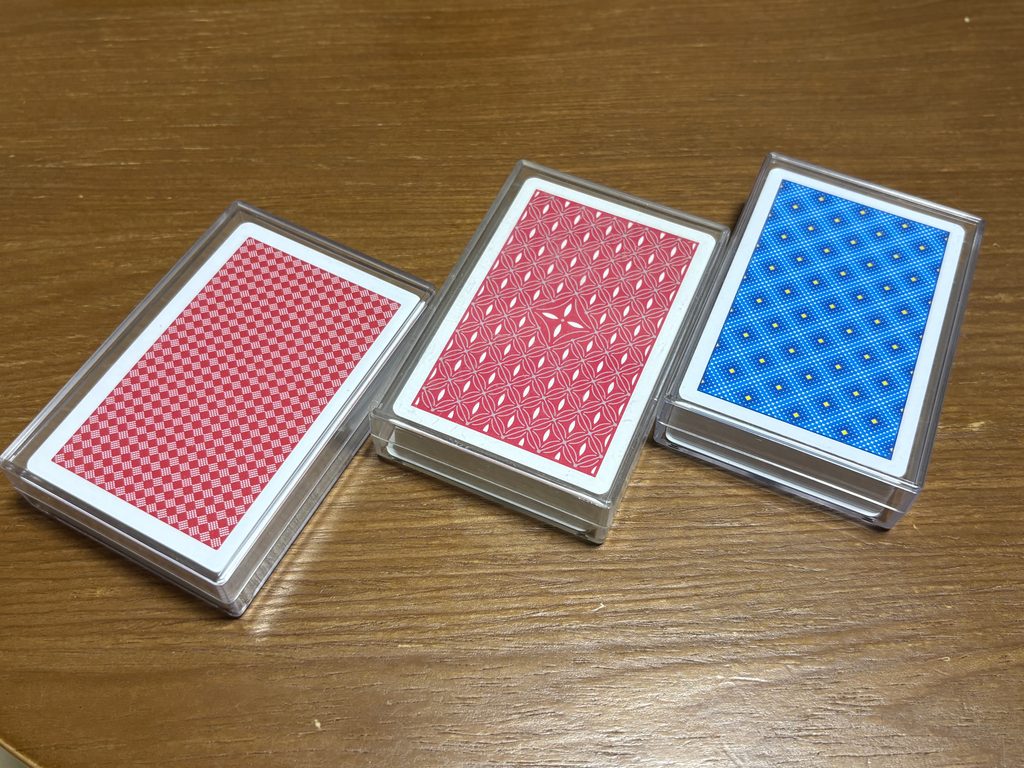
From left to right: “Sugo-playing-cards” Red, “EX Model Number,” and “SPNN832”
Conclusion: There are differences in texture and embossing between the non-EX and EX versions.
I found that the SPNN832 (non-EX) is the least expensive model of the three (the blue one), and that it differs from the EX model in terms of its embossed finish. The SPNN832 has a smoother texture, and the rough feel characteristic of the EX model is less pronounced. I didn’t notice the difference until I touched them side by side, but they are definitely different.
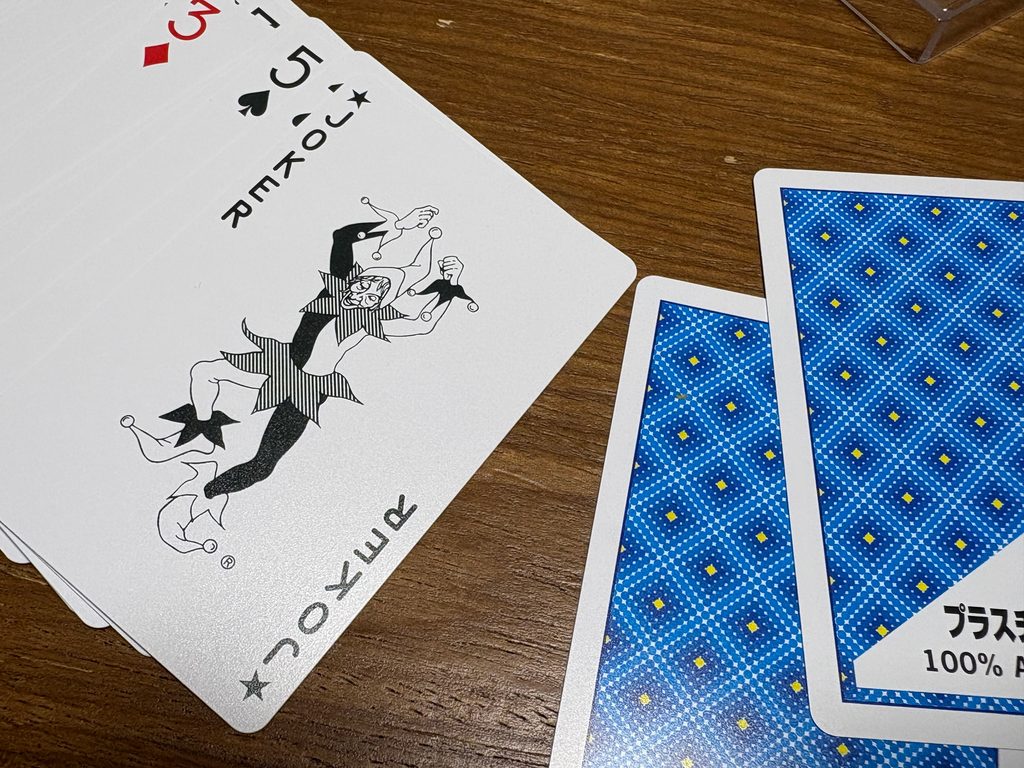
However, the SPNN832 also features different embossing on the front and back, making the cards prone to slipping—just like the EX and Sugitram cards. This design—using different embossing on the front and back to make the cards slippery—appears to be common to all three products.
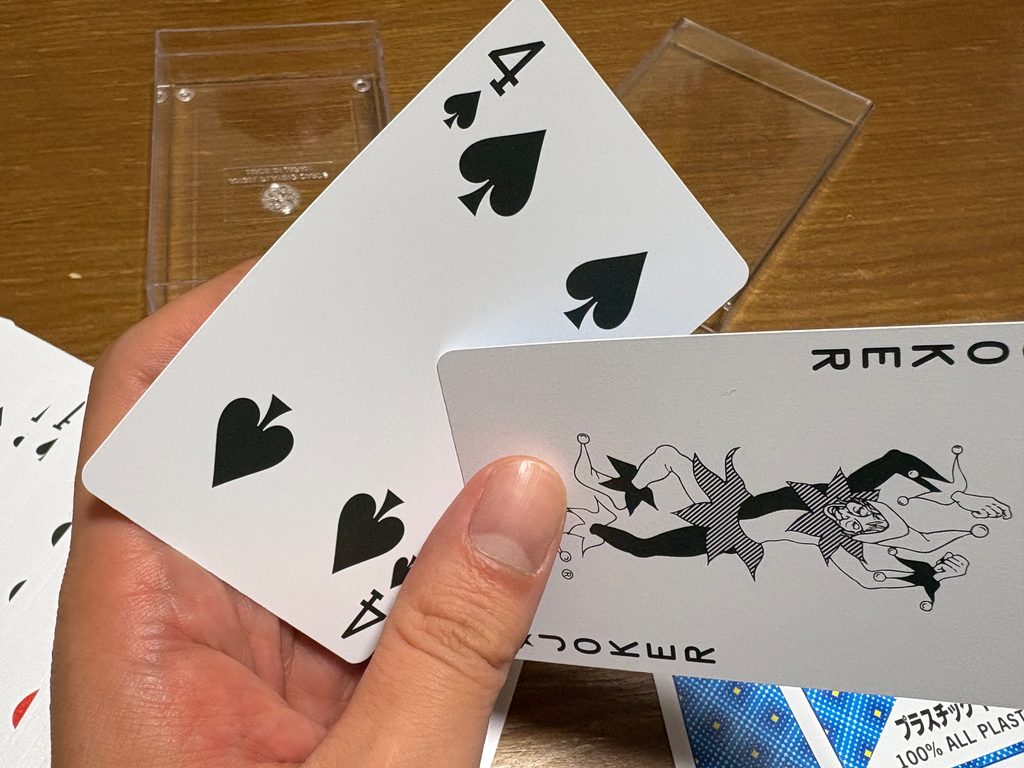
It might just be a matter of personal preference, but in terms of the high-end finish, I think the EX model is superior to the SPNN832.
What’s the difference between EX and Sugo-playing-cards?
When it comes to the EX model and the Sugo-playing-cards (SGNNBRG), I could barely feel any difference in their texture as playing cards. They likely use the exact same embossing. The easiest way to tell them apart visually is that the Sugo-playing-cards feature a square label on the box, making them instantly distinguishable.
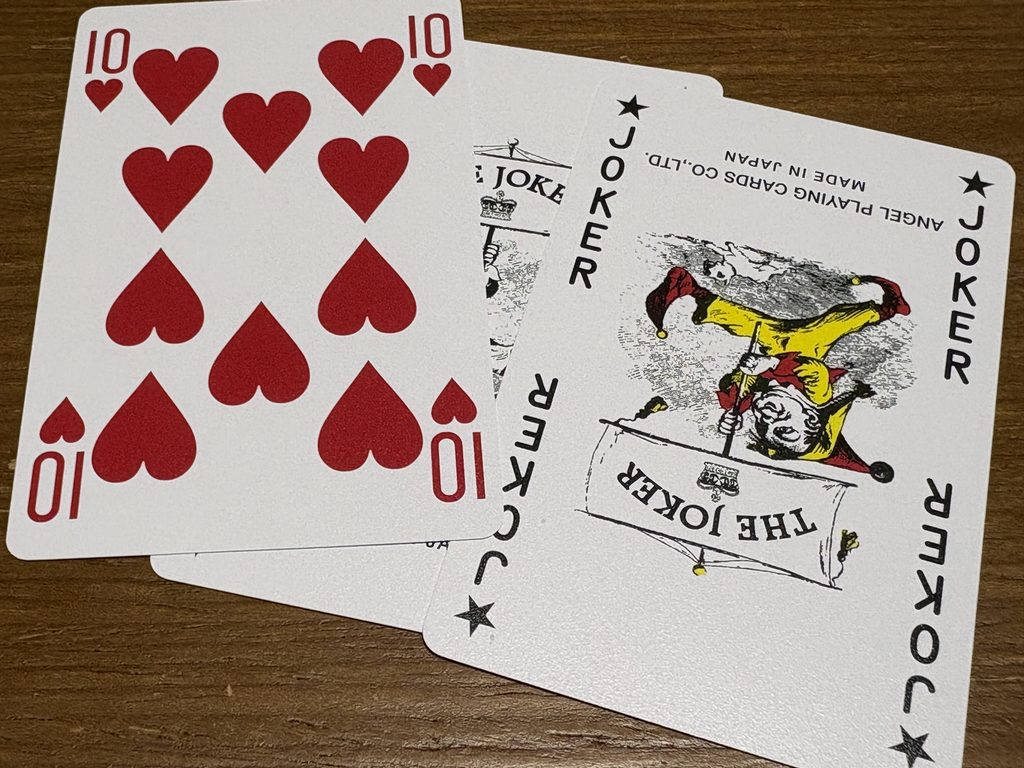
Thickness
All three products are thicker than the NAP series I mentioned in my previous comparison of Nintendo’s NAP series. If a friend asked me to recommend a bridge-sized deck of playing cards, I would choose these three Angel products over the NAP series.
Face Cards
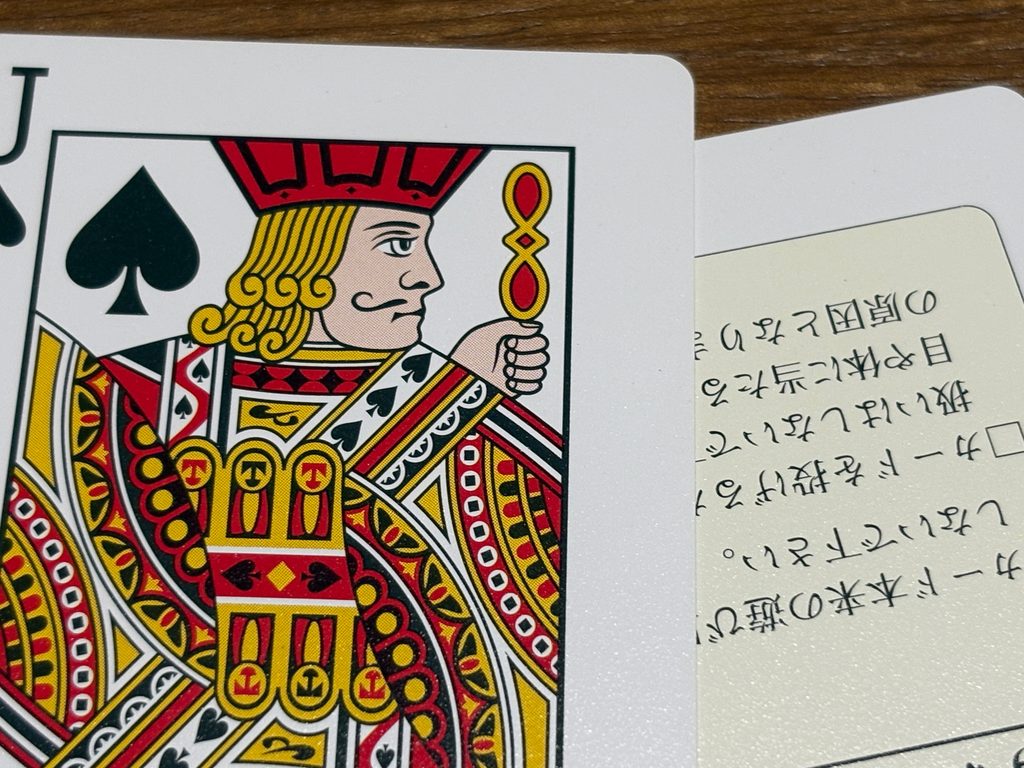
It’s a minor detail, but I also liked the fact that the skin areas of the face (court) cards are actually colored in a flesh tone.
Cases / A Word of Caution (or Cases)
One thing to note is that the included cases do not have a secure lock mechanism. The lids can easily pop open during transport, causing the cards to scatter, so they might not be ideal for situations where luggage tends to get handled roughly, such as a school field trip. They seem much better suited for use at home or on a desk.
Summary
To wrap up, the conclusion of this comparison is that the EX and Sugo-playing-cards are virtually identical on the inside, while the SPNN832 has a slightly different embossed texture that feels a bit cheaper compared to the other two, though the anti-slip structure on the front and back is shared across all of them. All three are thicker than Nintendo’s NAP series and make great recommendations for anyone looking for bridge-sized cards, but just keep in mind that the lack of a locking case makes them less than ideal for carrying around.