
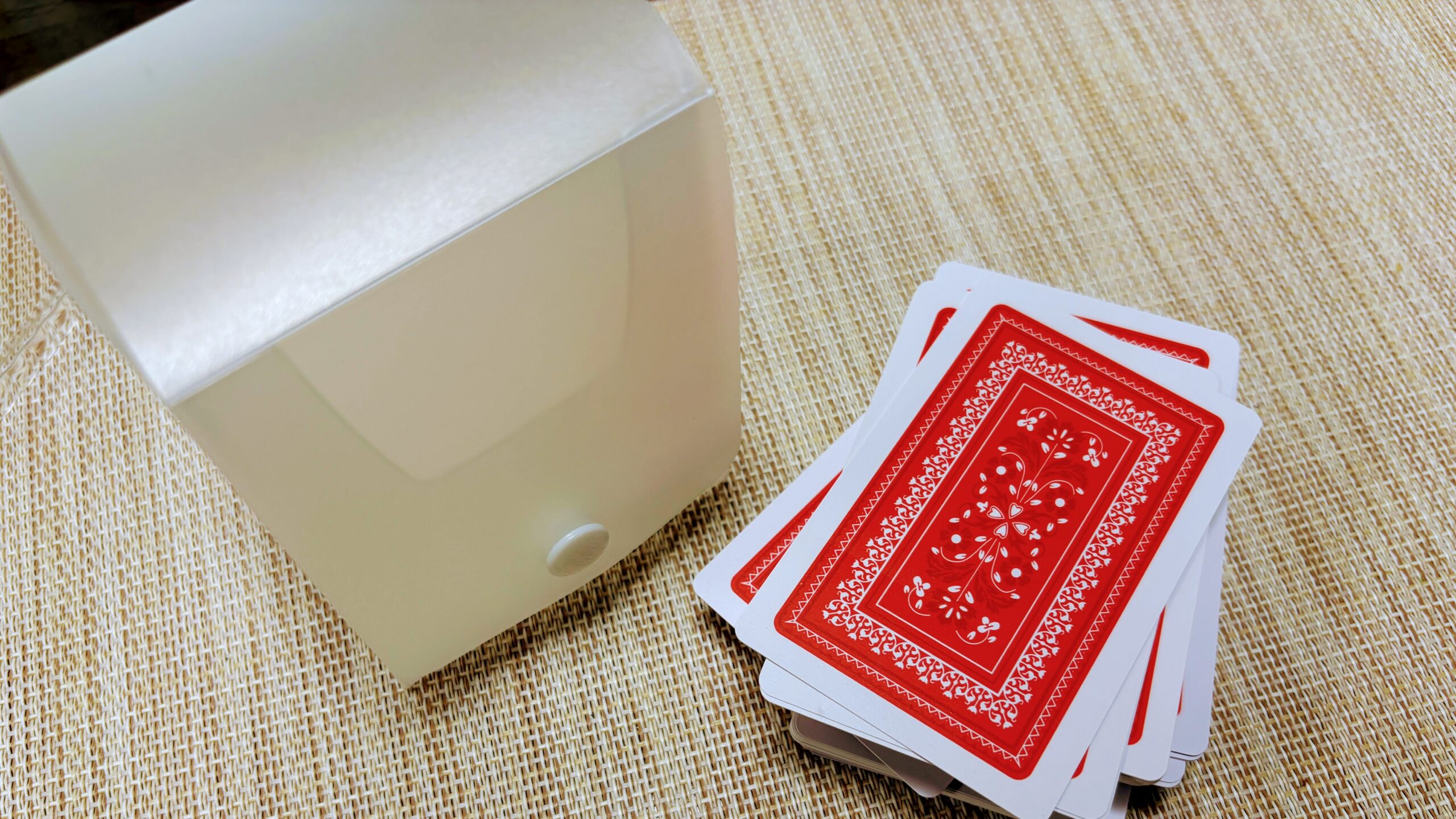
Surprisingly, quite a few card games are played with a double deck (104 cards, or 108 including Jokers). And we’re not talking about obscure niche games either—many major titles like Blackjack, Indian Rummy, and Canasta use them!
Doubling the number of cards changes the odds and smooths out the probabilities. This adds a nice depth to the strategy, and some games even achieve perfect balance because they use a double deck.
So, I decided to start a fun new series: “Let’s Play Double Deck!”
For Part 1, we tried playing American Page One—a card game similar to UNO—using a double deck!
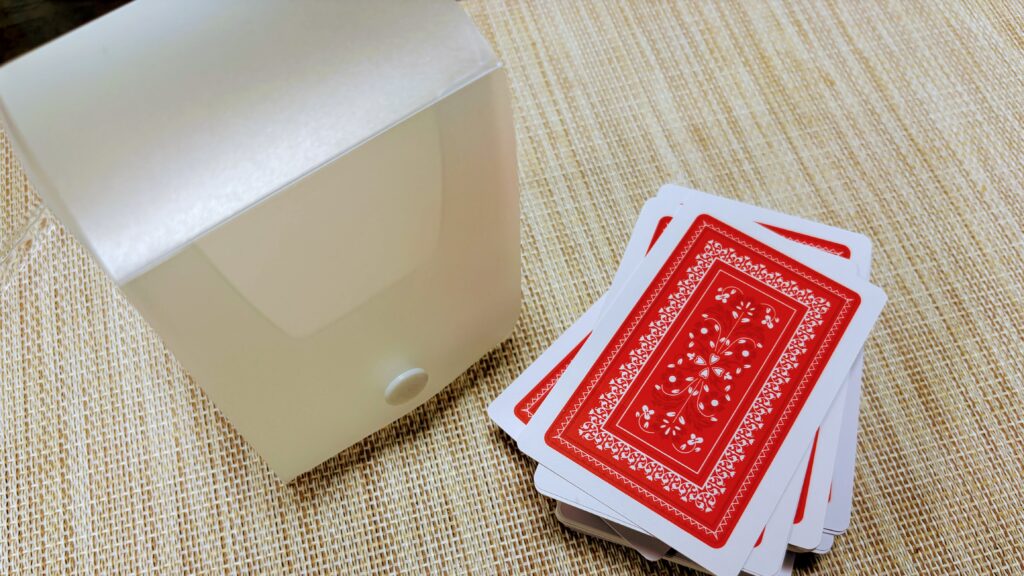
I picked up the double deck at a local 100-yen shop (dollar store). I bought two packs of plastic playing cards, plus a deck case meant for trading card games. The whole setup only cost me 330 yen (around $2.20)!
Since playing card games are much more popular in many countries outside Japan, I wonder if you can get them even cheaper over there!
What is American Page One?
There are a few different theories about its origins, but American Page One is widely known as a variant of the card game “Crazy Eights” and a direct ancestor of UNO. Depending on the region or group, it’s also referred to as simply “Page One” or “Last One.” (Note: In Japan, there is another card game called “Page One”—often nicknamed “Imohori” or potato digging—but they are completely different games!)
The basic gameplay is exactly like UNO. The rules are simple: you play a card from your hand that matches either the suit or the number of the top card on the discard pile. The first person to empty their hand wins. If you can’t play a card, you draw one from the deck. The key to winning lies in how you use or save your special action cards!
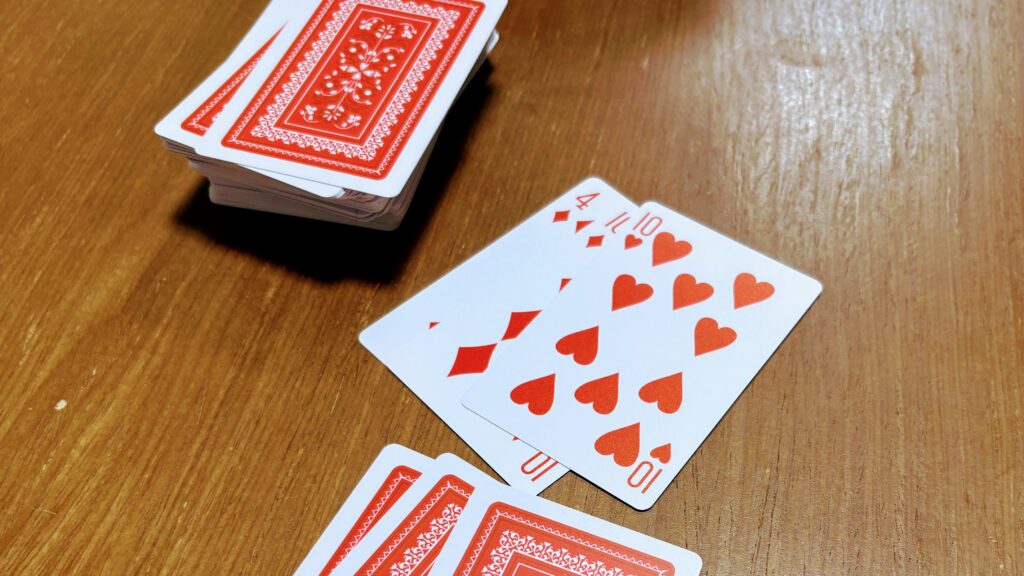
Special Cards Used in This Game
House rules can vary greatly when it comes to assigning special effects to numbers in this game, but here is the rule set we went with:
- Ace (Skip): Skips the next player’s turn.
- 2 (Draw 2): The next player must draw 2 cards. If they have a 2, they can stack it to pass the penalty to the next player.
- 8 (Wild): Can be played regardless of suit. The player who plays it chooses the new suit.
- 9 (Reverse): Reverses the order of play.
- Joker (Wild Draw 4): Can be played regardless of suit, and forces the next player to draw 4 cards.
As you can see, it’s basically a 1-to-1 mapping with UNO! Anyone familiar with UNO can jump right in without confusion. If you play with UNO’s penalty point system, it might make more sense to map the action cards to face cards, but I stuck with my usual house rules.
My Thoughts on Playing with a Double Deck
Compared to playing with a single deck (52 cards + Jokers), the double deck gave us way more chances to make a move after a suit change. It made the overall gameplay feel much smoother and more forgiving. (Honestly, the odds felt almost identical to actual UNO!) It makes me wonder if using a triple deck would make it even more laid-back.
Wrap-Up
The great thing is, even if you can’t make it to a toy store, as long as you have two decks of cards, you can basically play UNO anywhere. It’s perfect for a “card emergency”! The only thing that might feel a bit unintuitive at first is using the 8 as a Wild card (ignoring suits).
Just to clear up any potential misunderstandings—I absolutely love games from Mattel! I own and regularly play UNO, DOS, UNO All Wild!, and Phase 10 😂
I’m definitely NOT saying “Don’t buy UNO, just buy two decks of playing cards instead!” I just wanted to share a fun way you can enjoy a similar experience using a standard deck of cards you might already have at home.